
Local students show compost can be made in outer space


ELORA – Astronauts can compost biodegradable materials at the International Space Station (ISS).
That’s what four local students learned from an experiment they created that spent about a month in outer space late last year.
Myelle Mulder, Lily Craven, Will Kelly and Cohen Pearl designed the experiment while they were in Grade 6 at Alma Public School.
The experiment launched from NASA’s Kennedy Space Centre on a SpaceX rocket on Nov. 4 and spent four weeks on the ISS.
The experiment was sent to space because it was chosen by a panel of NASA judges as the best micro-gravity experiment designed by Upper Grand District School Board students.
[related]
The opportunity was available through the Student Spaceflight Experiment Program.
Many of the other experiments were designed by students in Grades 7 and 8 at that time, making it an even greater accomplishment that the Grade 6 Alma students’ experiment was selected.
On Jan. 18, the four students, who are now in Grade 7 at Elora Public School, had the opportunity to analyze the results of their experiment.
The students found that the piece of compostable plastic they had buried in soil, placed in an airtight tube and sent off to space, had reduced in size during its time on the space station.
The students also created a control sample that did not go to outer space, and the compostable plastic bag biodegraded at about the same rate.
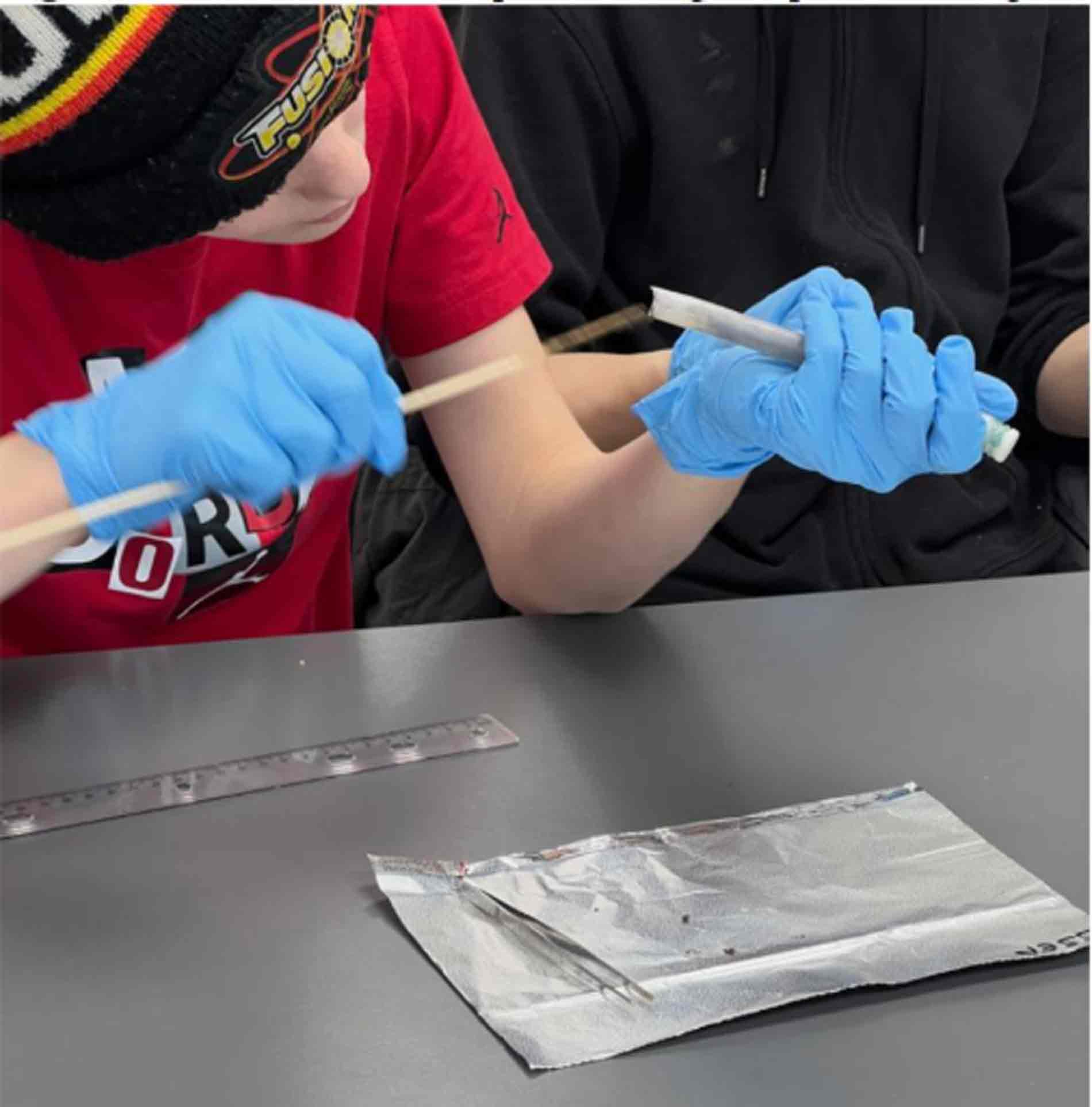
There was also a second ground control, with just the compostable plastic bag pieces and no soil. In this sample the pieces stayed the same size.
The results are significant, Pearl explained, because it shows that people could decompose scraps from the food they eat while living in space.
“And you could grow food in space,” using the compost created by the food scraps breaking down, Craven added.
That would make it much more affordable to grow food in space, Mulder noted, because you wouldn’t need to ship all the soil from Earth.
The students described hurdles they faced throughout the process and how they adapted their approach to overcome those challenges.
After the expert judges reviewed their experiment proposal, they sent back advice about how to improve the experiment before sending it out to the NASA astronauts on the ISS, Mulder told the Advertiser.
There was initially too much soil in each sample, Kelly said, so the students reduced how much soil they included.
And they had considered including live worms in the composting material, added Craven.
But they had to rethink that because they weren’t allowed to send living creatures over the boarder to the U.S., Kelly said.


